
Buzzlineman is reader supported. If you purchase after clicking the affiliate links, I’ll earn some money- maybe even enough to buy me a new pair of work gloves. You do not pay a higher price.
Lineman accessories don’t often get talked about because they aren’t near as exciting as a new climbing belt or a high impact drill. However, they are important to complete the job efficiently and with ease. Sometimes a lineman will use certain accessories when installing the support strand, sometimes strictly for fiber. From carabiners to lag screw nut drivers, we cover all the best lineman accessories for fiber optic lineman.
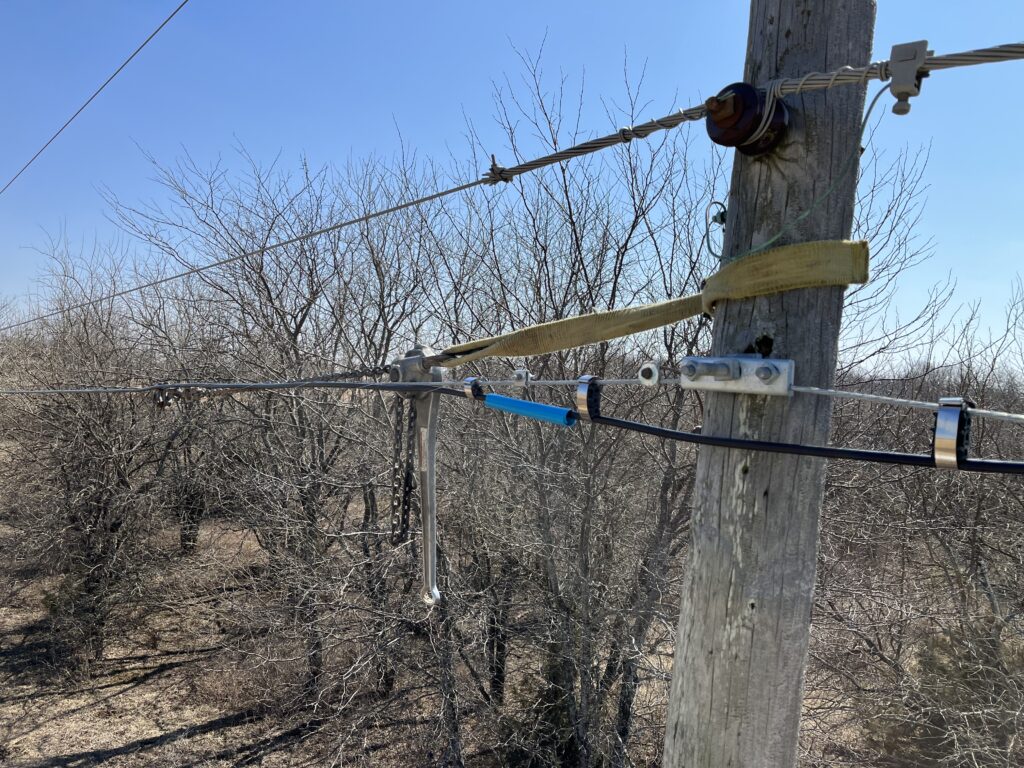
The type of fiber optic lineman work I do includes support strand made of galvanized steel. This support strand is installed prior to the fiber optic cable. Fiber then gets attached to the strand via a cable lasher that spins and each rotation wire from within the lasher wraps the fiber to the strand, keeping it tight to the strand. Since we install the strand and fiber at separate times we use different accessories and tools during each installation process.
Lineman Accessories for Installing Strand
From drill handles to climbing belt hooks there are all kinds of different accessories lineman choose to use when putting up strand. Some of these accessories can be optional while others are necessary to correctly complete the task at hand. Below are some of the best accessories that me and other lineman use for strand.
Side Handle for Drill
This is one of my favorite accessories on the list and I’ve broke a few of them by over tightening. If you’ve ever been drilling into a pole and hit a knot, the drill will suddenly jerk and this jerk can really tweak the wrist. But with the side handle you are able to withstand that jerk with ease. The handle also allows you the ability to push and more importantly pull the drill bit out of the pole when it’s a tight fit.

Battery Charging Inverter
The drill is one of the most important tools for a lineman. Without it, holes can’t get made for the frames that house the strand. So it’s crucial to keep that drill battery charged up and ready to go.
One of the worst feelings as a lineman is to get to the job only to realize you forgot to take your batteries home and charge them. Now you’re stuck with a full days work ahead of you with 0% battery. However, with an inverter you can have on the field battery charging available. Plug the inverter into your cigarette lighter outlet then attach the battery charger. As long as you have a backup battery you should now never have to worry about dead battery issues.

Battery Charger
The battery charger obviously goes hand in hand with the inverter and is a key cog to keeping that drill up and running. This DeWalt battery charger is what I have been using for years and it continues to work just as well as the first day.
Pole Sling

A pole sling is an accessory that comes in handy for multiple occasions. It wraps around the pole so you can attach other accessories and tools to it. Most pole slings have O rings that fit through each other and are made of nylon. A few scenarios when using a pole sling are:
- With a Hoist
- Used with a Power Roller
- Tightening Strand via Truck/Trailer
Pole Sling With a Hoist
A lineman will use a pole sling to tighten and loosen the strand line by attaching a pole sling to the pole and then the hoist to the pole sling. This keeps the hoist supported to the pole and the other end of the hoist is attached via cable grip puller.

Pole Sling with a Power Roller
A quick and easy way to pull out strand when you come to a corner pole is to use a power roller attached to pole sling. You don’t want to use this on long pulls with lots of curved poles, but if you just have a few spans to go; a pole sling is a great accessory to use. The power roller helps the strand stay true to the pole line and can also help keep your strand from rubbing on fences and such.
Pole Sling on Truck/Trailer
The most efficient and simple way I know how to tighten strand on the pole line involves the pole sling attached to the trailer that has the strand. On the other end of the pole sling is either a preform or a cable puller. Once you attach the pole sling and preform to the strand that you are using you then tighten it with the truck. A couple things to consider as a groundhand sucking up strand are:
- Don’t attach your preform to the stand until the lineman is in place with the strand.
- Pull slack from trailer for the lineman.
- Don’t forget to undo the preform so you don’t create a dangerous situation.

Quickie for Deadend Poles
I’m not sure what the proper name is for this accessory, but I call it a quickie and it comes from the auxillary eye material used for downguys. I use the quickie on deadend poles, because there is no clamp on deadend poles.
You slide the U shape through the hole of the preform and then your stand. Then you can place the solid piece with 2 holes onto the U shaped piece, put on the 2 round nuts and you should be good to go. Make sure your stand and quickie provide an easy route to the trailer and truck and then have the truck begin tightening the strand.

Lineman Accessories for Installing Fiber
Much like strand, fiber has some specific accessories that help get the job done. A couple of them are nice to have accessories while others are needed to correctly do the job. Fiber is less forgiving in comparison to strand. If it gets ran over by vehicles or bent at a sharp angle it can easily become damaged. You just got to be a lot more careful when handling the fiber.
Some of my favorite fiber accessories include:
Lag Head Nutdriver for Impact Drill
The riser guards I am familar with all have 16 holes for lag screws. PLUS multiple projects I’ve worked on want you to put 2 in the top through the plastic (which is a real pain in the ass). And it’s not uncommon to need additional riser guard on those nice tall poles.
It’s possible to put in every screw with a hammer, so that is one option; but I prefer to use an impact drill. Put the 7/16 nutdriver in your impact and a full battery and you should be good to go all day. I like it way more than using a hammer. I recommend you get one that is magnetic because you won’t always have a free hand to hold the screw in the accessory.

Handsaw for Hard Plastic & Wood
2 different types of saws here. 1 saw for riser guards when installing fiber and a wood saw for cutting tree branches and limbs.
Riser guards need to be 12 feet from the ground. They rarely fit perfect, they’re either too long and need cut or you have to add additional riser guard and that usually needs cut also.
The riser guards are made of hard plastic and this DeWALT saw works great for the job. It’s very durable and easy to handle. However, if you’re looking for something less expensive give this Craftsman saw a look. I’ve used it and it too works well.
A wood saw is needed for the tree branches and limbs. Ideally the pole line is cleared of all branches and limbs before we get there, but we know that’s just not how it goes sometimes. So a nice little wood handsaw is a must. If you need one check out this Irwin wood saw. Don’t let yourself get in a situation where you need a wood saw and you don’t have one. We work dangerously close to power lines, be safe and pay attention to what you’re cutting and where you are at.
Carabiner for Fiber & Climbing Belt
People do things different on this job. That’s just the way it is. Some people don’t like to use carabiners at all. I’m not those people.

Before swapping the lasher I will attach my carabiner to the opposite side of the straight clamp of the lasher. This helps keep the fiber supported so it doesn’t weigh so heavy on the lashing wire, especially 144 count fiber. I should mention for 12 count fiber I rarely use a carabiner for this purpose.
Another situation where I will use a carabiner is when I’m doing my straps and spacers on a tap pole. In this situation the carabiner isn’t used for the lashing wire, but to keep the fiber near the strand for easy installation of straps and spacers.
So, once again I will attach the carabiner to the opposite side of the straight clamp and then attach my straps and spacers. Move my carabiner to the other side and do the same. It’s neat, produces a good looking finished product and most importantly makes work easier.
Any large carabiner will work, here’s one I use at work. Plus I always have one on my climbing belt.
Another reason to use a carabiner for fiber is to carry your riser guards. A small rope and a small carabiner that will fit through the lag screw holes of the riser guard will work wonders.
I’ve tried to get by without this method by placing the riser guard in the bucket with me. This meant a ton of the riser guard was sticking out of the bucket. I hated it constantly falling on me, but most of all I hated how dangerous it was. We work only a few feet away from power lines and that riser sticking out of the bucket was too close to danger for my comfort. Do yourself a favor and let it hang from the same area you attach your harness.
Climbing Belt Hook
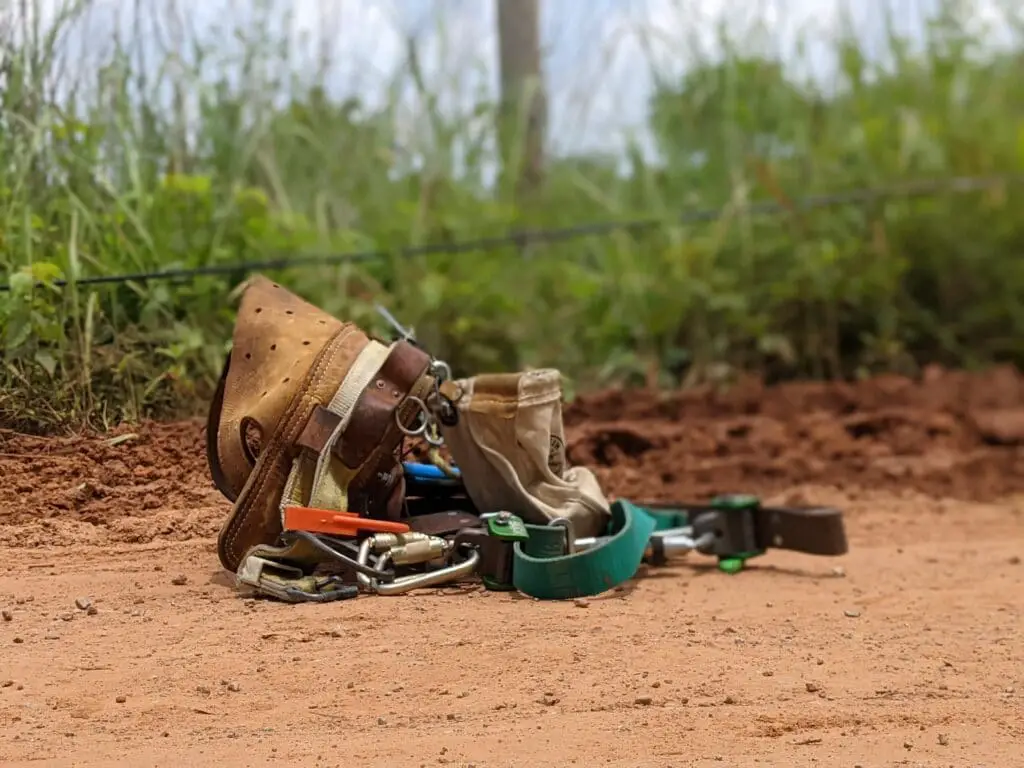
A small accessory that holds a lot of value is a handline belt hook for climbing belts. It snaps on the belt easily and allows lineman to attach their handline and other tools. Not only is it convenient for your handline, but I also use it to carry preforms, my impact drill when attaching risers on hooks and my saw.
I will warn you that my climbing belt hook has fallen off my belt a couple times. This usually happens when I am tossing it on and off the 4 wheeler or over fences, I’m guessing it gets snagged on something and slips off the belt. For that reason I think it’s wise to have a spare that you leave in the truck so you’re not left in a bad situation.
Final Words
I hope you’ve picked up a new lineman accessory to add to your lot of tools and accessories needed to do this fiber and strand work we do. I’m sure there are all kinds of other accessories out there that can help make this job even easier, but these are the ones I’ve come to depend on.
If you want to check out some more accessories, but specific to the lineman bucket, check out this article that goes into more detail- 13 Bucket Truck Accessories for Every Lineman.